
How to Find Your Septic Tank

If you own a home with a septic system, there will come a time when you need to find your septic tank. If you’re preparing for a septic pumping service, checking the lid, or troubleshooting a possible issue, knowing where your tank is located can save you time and money. A bunch of homeowners haven't had to look for it before, so don’t worry if you don't know how to find it — you’re not alone.
Start With Basic Clues Around Your Property
Most septic tanks follow a predictable layout. If you know how the system is generally structured, finding it becomes much easier.
1. Identify the Main Sewer Line Leaving Your Home
Go to your basement or crawl space and look for the large pipe that carries wastewater out of the house. This pipe usually goes straight through the foundation and continues underground toward the tank. Once you know the direction it is heading, step outside and use that as your starting point.
2. Look for the Cleanout Pipe
Many homes have a small round or capped pipe near the foundation called a cleanout. This pipe often points toward the septic tank and gives you a general sense of direction.
Check Areas Where Tanks Are Commonly Installed
Septic tanks are typically installed at least five to twenty five feet away from the house. They are rarely placed in high traffic zones or under large trees, since roots and weight can cause problems. Walk in the direction of your sewer line and look for areas that make sense for an underground tank.
Common signs include:
Depressions or raised mounds in the yard
Grass that grows faster or is greener than the surrounding area
Flat, open sections with no large shrubs or trees
None of these are guarantees, but they can point you in the right direction.
Use a Septic Tank Map if You Have One
Some homeowners receive a septic layout map during a home purchase or from a previous inspection. This document can make locating the tank very simple. If you do not have one, your local township or county office may have a copy on file, especially if they track septic permits.
Follow the Plumbing Vent or Roof Stack
Your plumbing vent pipe sticks out of the roof to release sewer gases. This vent is usually aligned with the main waste line below it. If you stand outside and visually follow a straight line from the vent down toward the ground, you can get a helpful hint about where the septic line exits your home.
Probe the Ground Gently
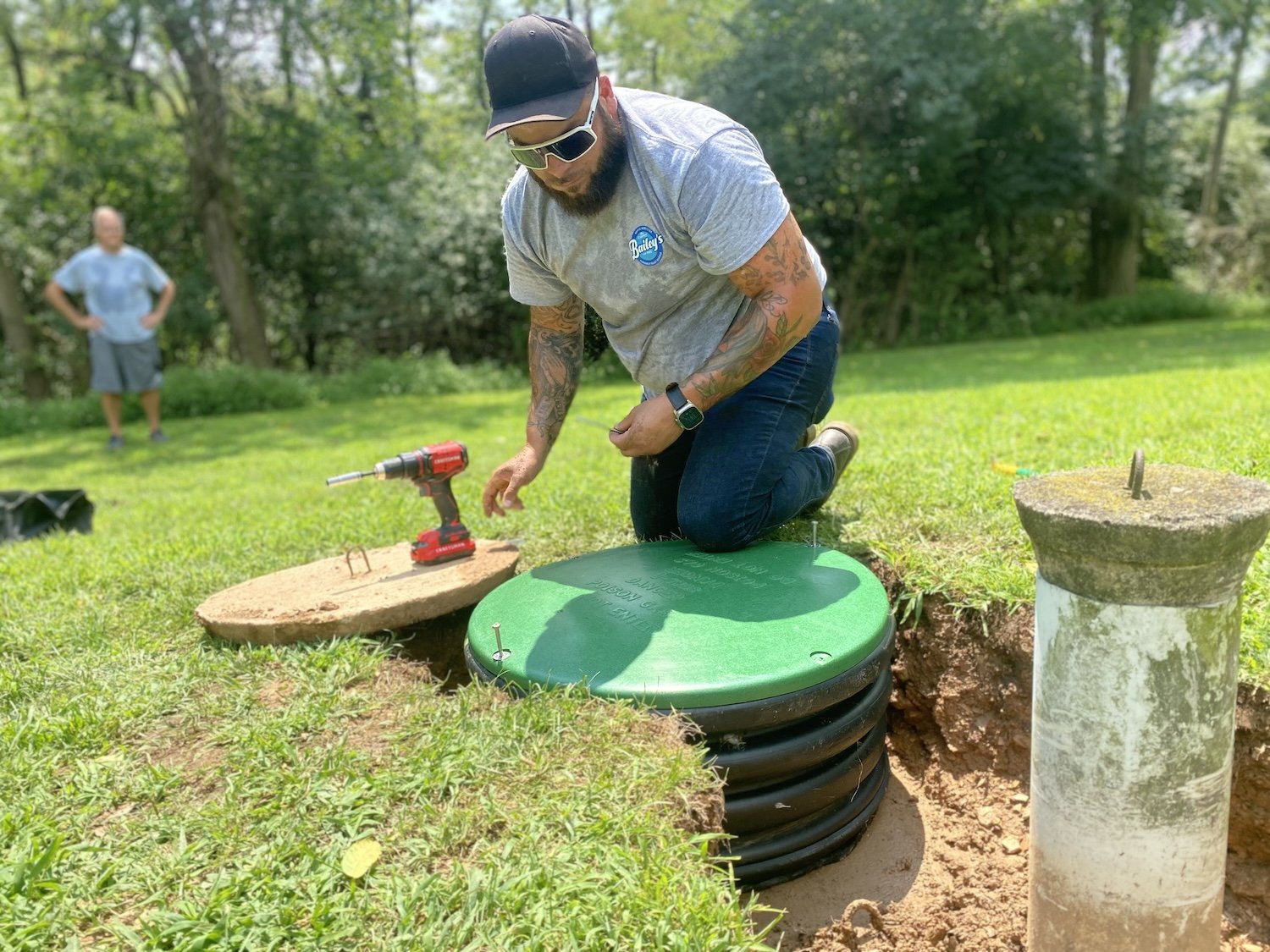
Homeowners should be very careful when probing for a septic tank, since older systems and certain tank designs can have fragile components. Applying too much pressure or probing in the wrong spot can crack lids, damage baffles, or break inspection ports. If the lid is buried and difficult to access, it may be a good time to consider having risers installed. Risers bring the lid up to ground level, make future pumping quicker, reduce digging costs, and help service teams access the system without disturbing the yard. If you are unsure about probing or think your tank may be older, calling a professional is the safest option.
With that in mind, once you have a general location, use a long metal probe to feel for the tank. Push the probe into the soil every few inches as you move along your suspected area. When you hit something solid and flat, you may have found the tank or the lid.
Do not use excessive force, and avoid stabbing too deep near the suspected drainfield. This step should be slow and careful.
Look for the Septic Tank Lid
Most tanks have one or two lids, depending on their age and design. Lids are usually circular and made of concrete or plastic. If your tank is older, the lid may be buried several inches under the surface. If your tank is newer, the lids may be at ground level with visible risers.
Once you locate the tank, mark the spot with a flag, stake, or another clear indicator. This small step makes future pumping appointments easier.
When to Call a Professional
If you cannot locate your septic tank after following these steps, it may be time to call a professional. Over time, yards change, landscaping grows, and old tank locations become harder to identify. Bailey's Septic has the tools and experience to locate tanks quickly, and we can mark your system for easy access in the future.
Need an Inspection? | Bailey’s Septic Services Berks County
With a little patience and the right approach, most homeowners can locate their tank without much issue. If you need help or want an inspection once you find it, Bailey's Septic is ready to assist. Our team has been providing septic inspections in Berks County for decades, and we proudly support local homeowners with reliable pumping, inspections, and portable restroom services.
